> ## Documentation Index
> Fetch the complete documentation index at: https://docs.attio.com/llms.txt
> Use this file to discover all available pages before exploring further.
# Bulk record action
> Add a bulk action for records selected in a list
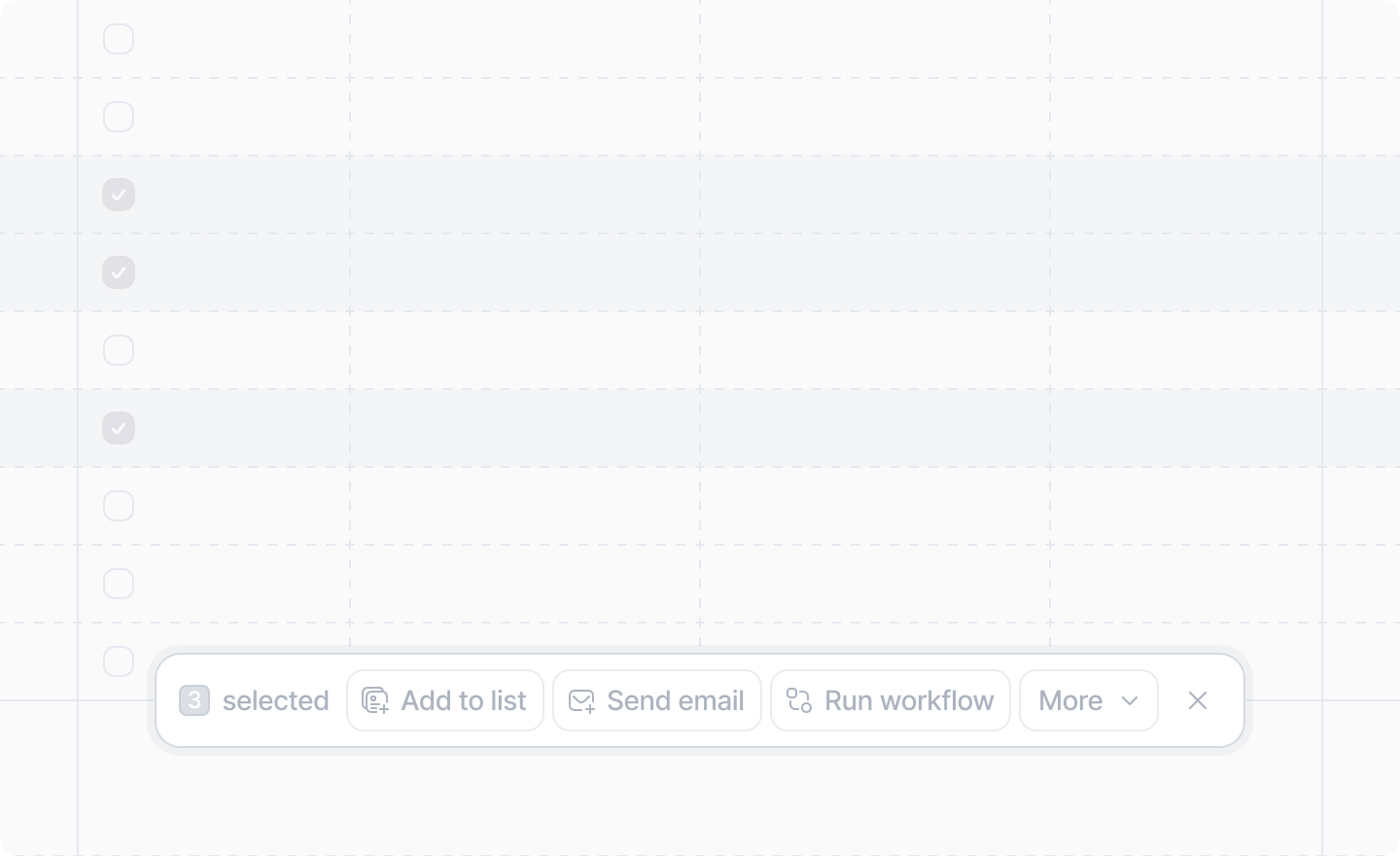
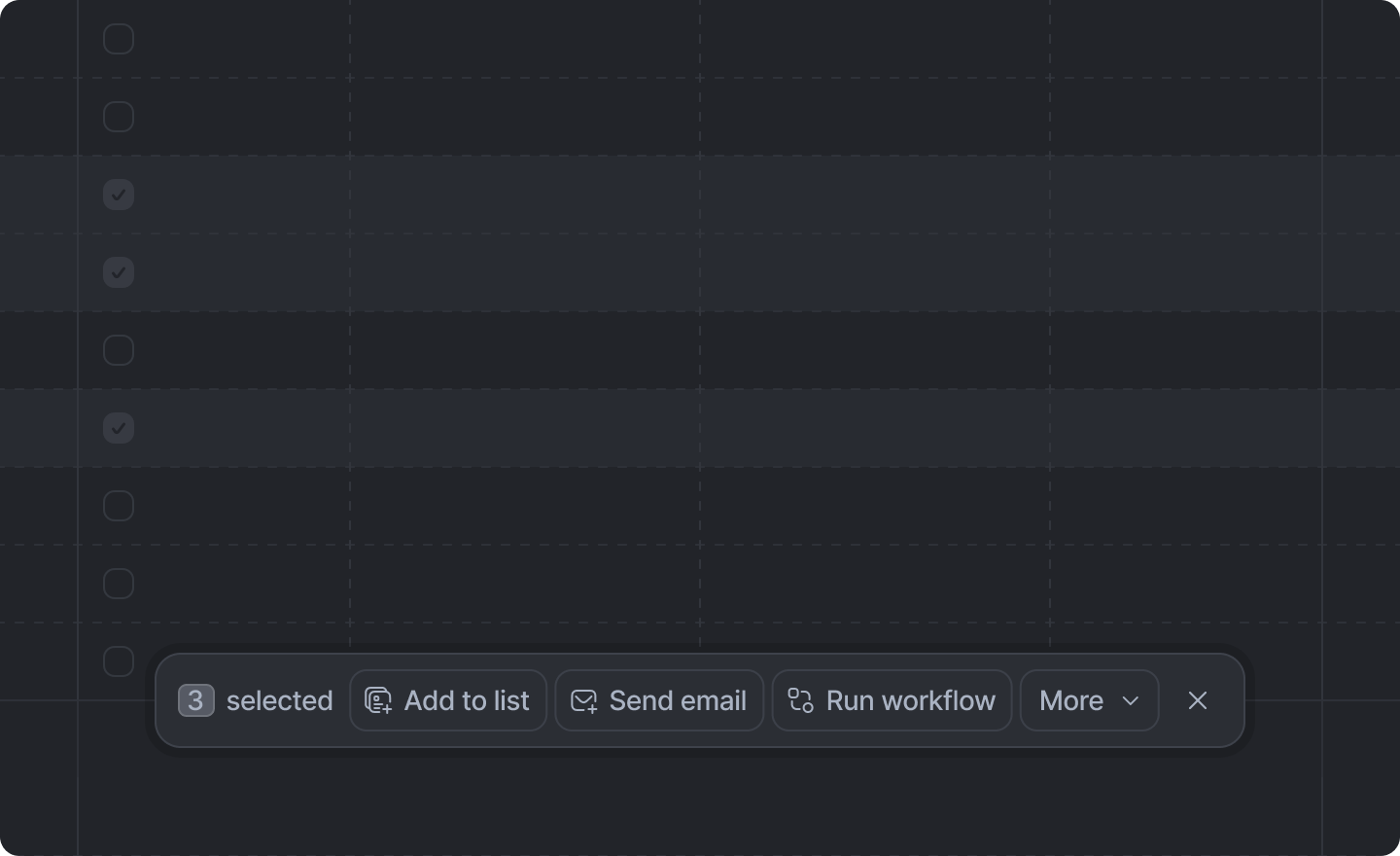 Bulk record actions are rendered when multiple record rows are selected in Attio.
Add a bulk record action by creating an extension folder under `src/app/extensions/` whose `extension.tsx` default-exports a `defineExtension` call with `type: "bulk-record-action"`. See [App structure](./overview) for the discovery rules.
## Example
```tsx src/app/extensions/send-invoices/extension.tsx theme={"system"}
import {Extensions} from "attio/client"
export default Extensions.defineExtension({
type: "bulk-record-action",
id: "send-invoices",
label: "Send Invoices",
icon: "Sales",
onTrigger: async ({runRecordBatches, object}) => {
await runRecordBatches({batchSize: 50}, async (batch) => {
// Process each batch of record ids
})
},
objects: "people",
})
```
## Arguments
Identifies this extension as a bulk record action.
The unique identifier for this action.
It is only used internally; never shown to the user.
The human-readable label for the bulk record action.
An [`AttioIcon`](../icons) to display in the action.
If no `icon` prop is provided, it will default to your app's icon that you set up in the
[Developer dashboard](https://build.attio.com).
(
options: RunRecordBatchesOptions,
worker: (batch: RecordBatch) => Promise
): Promise>>,
object: ObjectSlug
}) => Promise`}
>
The function to run when the action is triggered. It receives an object with:
* **`runRecordBatches`** - Processes the selected records in batches (up to 250 per batch).
Call it with `options` (`batchSize`, and optional `onStart`, `onProgress`, `onComplete`, and
`onError` lifecycle hooks) and a `worker` function that receives each `RecordBatch` and
returns a promise. Returns a `BulkRecordActionBatchRunOutcome` with either `success: true` and
`results`, or `success: false` with `partialResults` and `error`.
* **`object`** - The [object slug](/docs/objects-and-lists) being processed (e.g.
`"people"`, `"companies"`).
You might run a [server function](../server/server-functions) inside the worker for each batch,
and/or [show a dialog](../dialogs/show-dialog) or toast based on the outcome of
`runRecordBatches`.
A single slug, an array of slugs, or a predicate to select which types of record the bulk record
action will apply to. The predicate receives `{attributes, object, isStandard}` for the record
and returns whether the action should be shown.
Defaults to `undefined`, which will cause the action to show on ***all*** types of records.
The built-in slugs are
* [`"companies"`](../../docs/standard-objects/standard-objects-companies)
* [`"people"`](../../docs/standard-objects/standard-objects-people)
* [`"deals"`](../../docs/standard-objects/standard-objects-deals)
* [`"users"`](../../docs/standard-objects/standard-objects-users)
* [`"workspaces"`](../../docs/standard-objects/standard-objects-workspaces)
Bulk record actions are rendered when multiple record rows are selected in Attio.
Add a bulk record action by creating an extension folder under `src/app/extensions/` whose `extension.tsx` default-exports a `defineExtension` call with `type: "bulk-record-action"`. See [App structure](./overview) for the discovery rules.
## Example
```tsx src/app/extensions/send-invoices/extension.tsx theme={"system"}
import {Extensions} from "attio/client"
export default Extensions.defineExtension({
type: "bulk-record-action",
id: "send-invoices",
label: "Send Invoices",
icon: "Sales",
onTrigger: async ({runRecordBatches, object}) => {
await runRecordBatches({batchSize: 50}, async (batch) => {
// Process each batch of record ids
})
},
objects: "people",
})
```
## Arguments
Identifies this extension as a bulk record action.
The unique identifier for this action.
It is only used internally; never shown to the user.
The human-readable label for the bulk record action.
An [`AttioIcon`](../icons) to display in the action.
If no `icon` prop is provided, it will default to your app's icon that you set up in the
[Developer dashboard](https://build.attio.com).
(
options: RunRecordBatchesOptions,
worker: (batch: RecordBatch) => Promise
): Promise>>,
object: ObjectSlug
}) => Promise`}
>
The function to run when the action is triggered. It receives an object with:
* **`runRecordBatches`** - Processes the selected records in batches (up to 250 per batch).
Call it with `options` (`batchSize`, and optional `onStart`, `onProgress`, `onComplete`, and
`onError` lifecycle hooks) and a `worker` function that receives each `RecordBatch` and
returns a promise. Returns a `BulkRecordActionBatchRunOutcome` with either `success: true` and
`results`, or `success: false` with `partialResults` and `error`.
* **`object`** - The [object slug](/docs/objects-and-lists) being processed (e.g.
`"people"`, `"companies"`).
You might run a [server function](../server/server-functions) inside the worker for each batch,
and/or [show a dialog](../dialogs/show-dialog) or toast based on the outcome of
`runRecordBatches`.
A single slug, an array of slugs, or a predicate to select which types of record the bulk record
action will apply to. The predicate receives `{attributes, object, isStandard}` for the record
and returns whether the action should be shown.
Defaults to `undefined`, which will cause the action to show on ***all*** types of records.
The built-in slugs are
* [`"companies"`](../../docs/standard-objects/standard-objects-companies)
* [`"people"`](../../docs/standard-objects/standard-objects-people)
* [`"deals"`](../../docs/standard-objects/standard-objects-deals)
* [`"users"`](../../docs/standard-objects/standard-objects-users)
* [`"workspaces"`](../../docs/standard-objects/standard-objects-workspaces)